All stars are supposed to be static in time. No change, no motion, no emotions. But, it is very surprising that a few stars has an abnormally high proper motion.
Hipparcos's measurements has revealed of nine fast stars with proper motion over few arc-seconds per year. The fastest known star is
Barnard's star. My students of Astronomical practicum has been observed of the field of Barnard's star for two years. Results are just amazing.
Our determination of the proper motion by precise astrometry of five to ten stars per exposure (total 15 - 20 exposures per observation run) gives values:
R.A.: -0.684 arcsec/year, Decl.: 11.660 arccsec/year.
They has been determined as difference of two robust arithmetical means of the star coordinates at Autumn of years 2006 and 2007. UCAC2 was used as an astrometrical catalogue. The values are in really good agreement with values acquired by Hipparcos: -0.79871, 10.33777. The determination of measure errors gives us uncertainty of order of tenths of arcsec. The differences both techniques are a little bit greater. Perhaps, the discrepancy comes due to apparent non-linear motion of Barnard's star and it is illustrated on Hipparcos pages. The periodic differences shows manifestation of Earth's revolutinons around Sun - parallax.
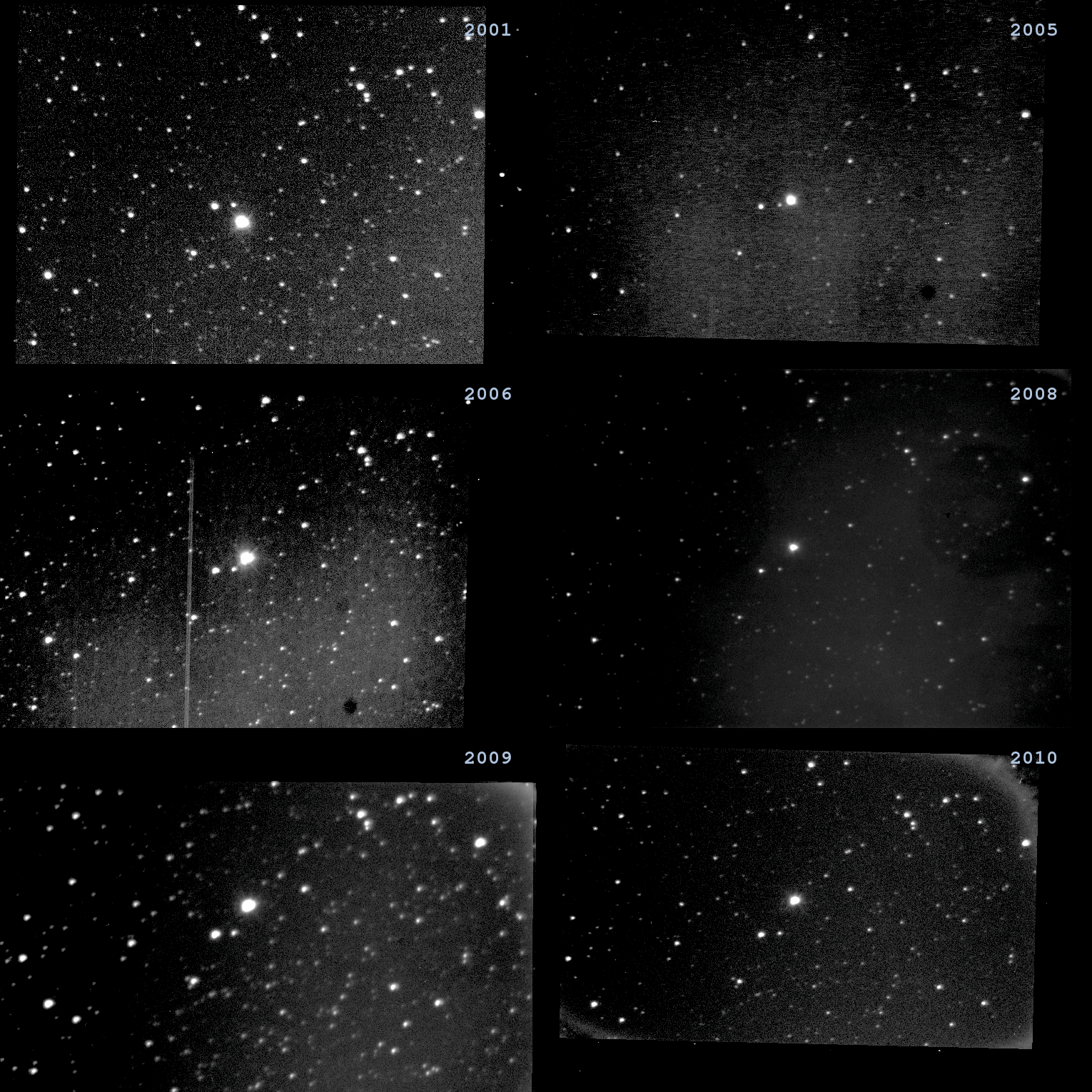
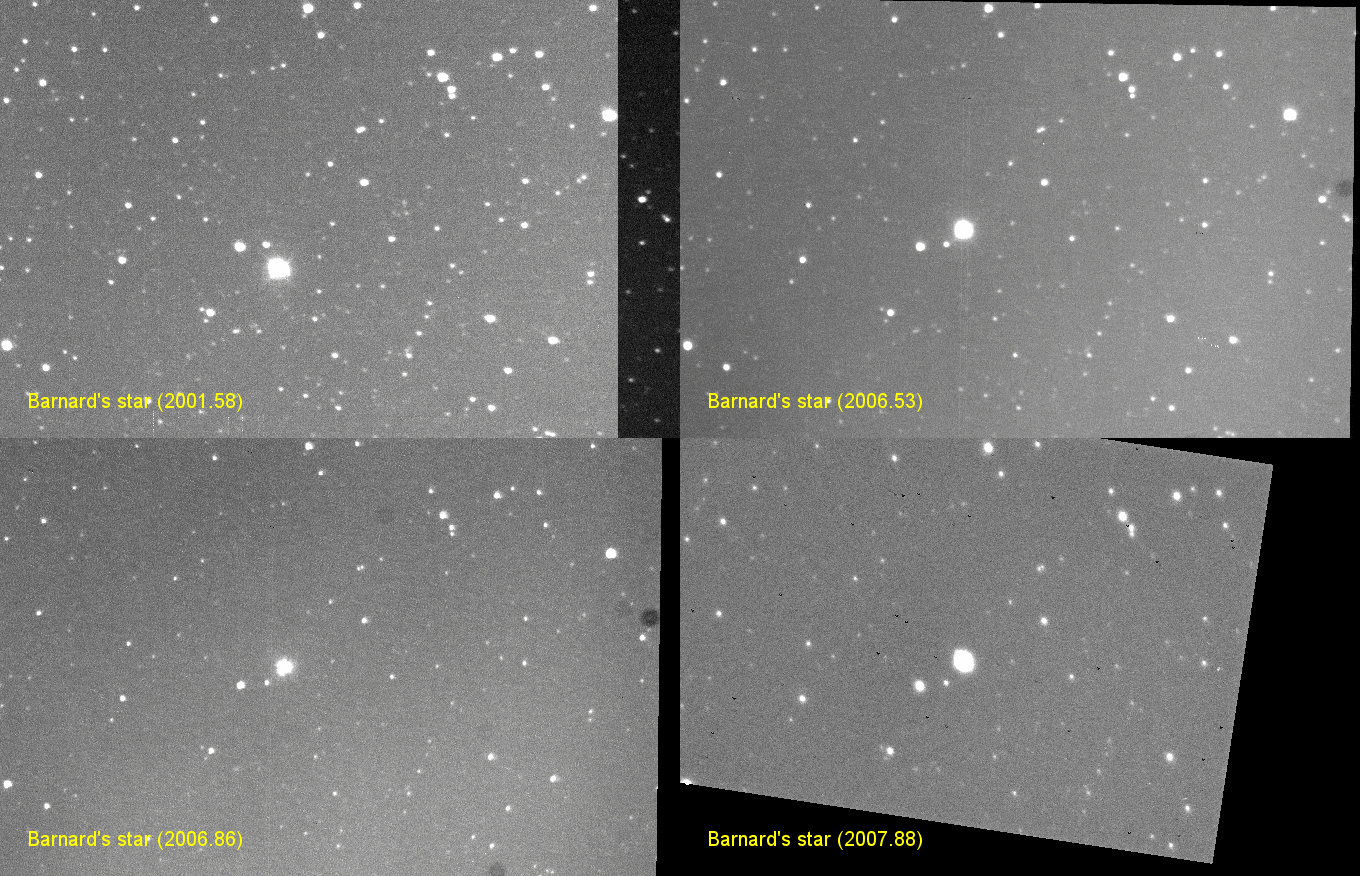
A better visual demonstration of Barnard's star motion exhibits a
four-frame animation of observations acquired at MonteBoo observatory over the last years. A single images which has been arranged to film frames are displayed at header of this post. The linked full frame animation shows change of the position of Barnard's star and (of course) some changes in health of our CCD camera. The first image (2001) presents perfect image while the next images (2006) shows two bad-reductable hot columns. The camera has been aged ten or eleven at time of exposure. The last image taken on HaP MK shows absolutely different field orientation and size. All images has been recomputed with respect to first image by rotation, shift and scaling by bi-cubic interpolation (kombine routine from Munipack).
The side product of our astrometry is determination of the focal length of the 40cm telescope of HaP MK Brno to value: 1.7122 +- 0.0007 m.
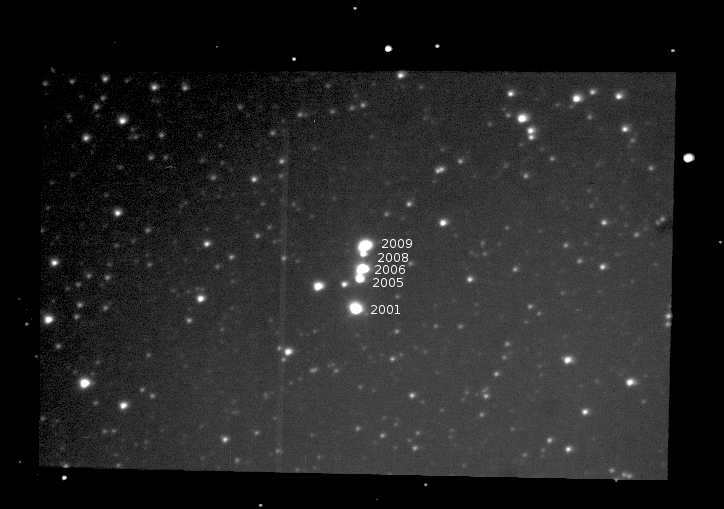
An another way to illustrate of the Barnard's motion is composition of all images to single frame. In my opinion, this is the most nicer way to present of a proper motion.
The original size version.